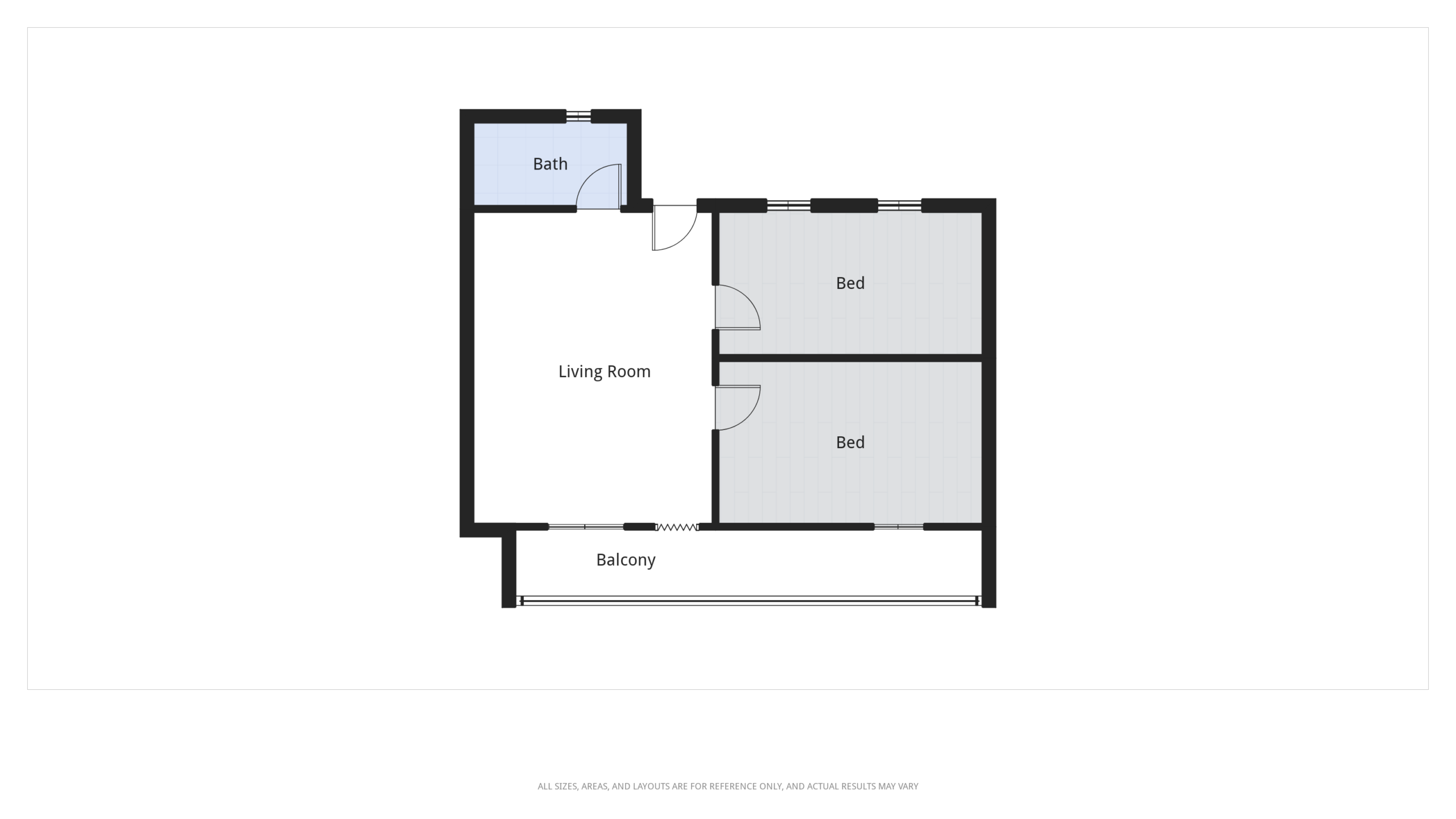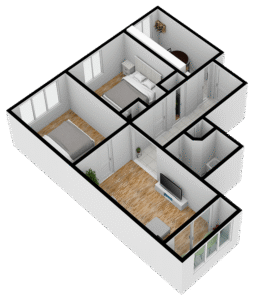
At CRETE3D, we work with property owners and agents every day, and we see the same challenge again and again: people want to understand a property before they commit their time, travel, or expectations. Photos alone rarely achieve that anymore.
A professional 3D tour changes the entire conversation. It allows potential buyers or tenants to walk through a property online, calmly and without pressure. When someone contacts you after viewing a 3D tour, they already know the layout, the room sizes, and the overall feel of the space. This leads to more meaningful inquiries and far fewer misunderstandings.
For agents, this means fewer unproductive viewings and more serious prospects.
For landlords, it often means smoother rentals and less back-and-forth. Instead of attracting everyone, a 3D tour attracts the right people.
A virtual tour is an online walk-through of a real property. Visitors can move from room to room, look around freely, and explore the space at their own pace, almost as if they were physically there.
Unlike photos, a virtual tour shows how rooms are connected and how the space actually works. You don’t need to imagine anything. The layout becomes clear within seconds.
There is nothing complicated about using a virtual tour. You open a link and start walking through the property. No apps, no instructions, no technical knowledge required. That is why virtual tours work equally well for younger audiences and for older landlords or tenants.
Not all virtual tours are created the same way. There are two very different approaches.
The first uses affordable 360-degree cameras, such as the Insta360 X5. These systems capture the property visually, creating a sequence of panoramic images. They can look good and are useful if the goal is simply to show what a space looks like.
However, these tours are visual only. They do not truly measure the property. Room sizes are estimated, proportions can feel slightly off, and no real spatial data is captured.
At CRETE3D, we work with professional systems that use high precision LiDAR laser technology. These systems do not just photograph the space – they measure it. Millions of laser points capture walls, ceilings, distances, and structures with high accuracy.
This creates real spatial data. The result is a virtual tour that feels natural, shows correct proportions, and can be reused for many purposes beyond presentation. It is a higher investment, but it delivers significantly more long-term value.
Virtual tours work because they remove uncertainty.
Most people hesitate because they are unsure what to expect. Photos can be misleading, and descriptions leave room for interpretation. A 3D tour answers most questions immediately and builds confidence.
As a result, physical viewings change their purpose. They are no longer about discovering the property, but about confirming a decision. This saves time, reduces stress, and makes the entire process more efficient for everyone involved.
One of the biggest advantages of professional 3D tours is transparency. They show a property honestly and completely. This builds trust and reduces disappointment later on.
Because our tours capture real spatial data, accurate floor plans can be created directly from the scan. These plans are based on real measurements, not estimates. For agents, this is a valuable extra. For buyers and tenants, it makes understanding and comparing properties much easier.
The captured data can be reused at any time. Floor plans can be extracted later without revisiting the property. Virtual tours can be embedded on websites or added to Google Maps and Google listings, making properties easier to find and explore online.
For architects and designers, the spatial data can be downloaded as a point cloud and imported into CAD software. This is especially useful for renovations, redesigns, or future planning, as it reduces site visits and speeds up decision-making.
In this way, a 3D tour becomes more than a presentation tool. It becomes a digital representation of the property that remains useful long after the listing is published.
Virtual tours are not about technology for its own sake.
They are about clarity, trust, and efficiency.
That is why at CRETE3D we don’t see 3D tours as an extra feature.
We see them as the new standard in professional property presentation.